The camps
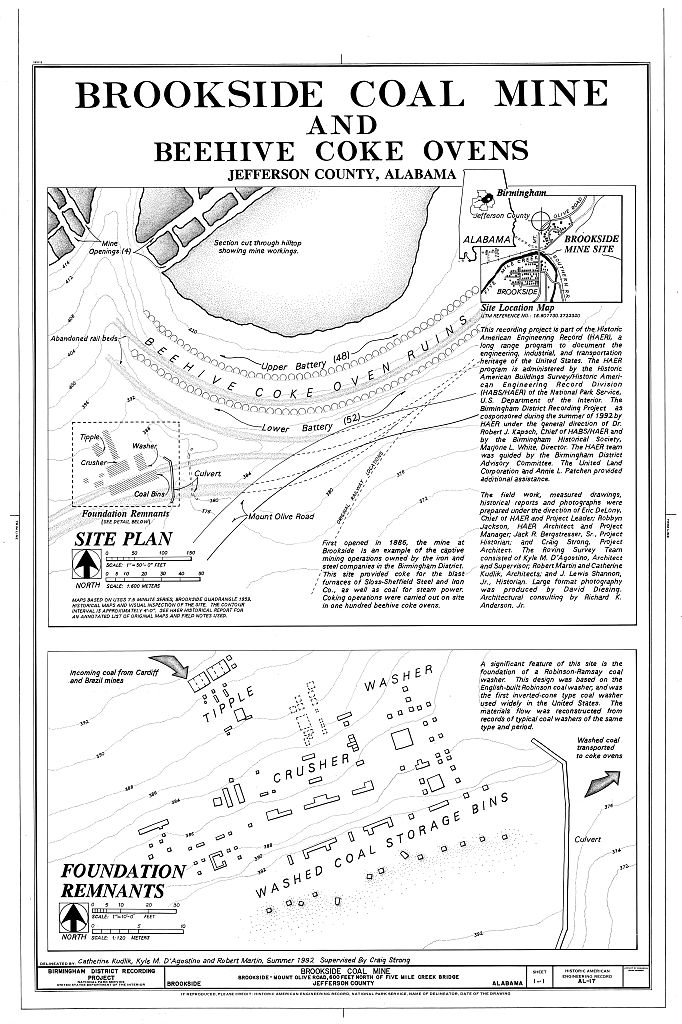
Everything that follows starts here, and it starts with a sale. The Crockers sold in 1880 to Isaac Price and James Williamson, two men who wanted what was under the land rather than the land itself. Price was Welsh and Williamson was Scottish, they opened the Cardiff mine, and Price named it for Cardiff in Wales, which is how one of four places in Jefferson County came to be named for somewhere in Britain. Then they did the thing that shaped the town more than the mine did. They wrote home. Price and Williamson sent letters to friends and family in Wales offering them work, hired out of Scotland next and then France and Italy, and inside a few years Cardiff held several hundred families from across Europe. Brookside's mine opened in 1886 under Coalburg Coal and Coke and ran for thirty four years, and Sloss Iron and Steel bought it in 1887 and started burning its coal in the Birmingham furnaces. Graysville was doing none of this. It had one cotton gin, no company behind it, and a name people used for it that was not its own, which was Gin Town.
What happened, and when
—- 1880CardiffCoal
Sold to two men who wanted what was under it
The Crockers sold in 1880 to Isaac Price and James Williamson, who opened the Cardiff mine. Price was Welsh and Williamson was Scottish, and they hired from home.
- 1880CardiffSettlement
Named for a town in Wales
Price named the mine for Cardiff in Wales, and the town took the mine's name. It is one of four places in Jefferson County named for somewhere in Britain.
- The 1880sCardiffPeople
They filled the town by letter
Price and Williamson wrote to friends and family back in Wales offering them jobs. That is how Cardiff filled.
- The late 1800sGraysvilleSettlement
It was Gin Town before it was Graysville
There was one cotton gin for miles and it was here, so Gin Town is what people called it. Who the Grays were, and when the name changed, nobody seems to have written down.
- The 1880sCardiffPeople
Hired out of Wales, Scotland, France, and Italy
Price and Williamson hired out of Wales and Scotland first, then France and Italy. Inside a few years Cardiff held several hundred families from across Europe.
- 1886BrooksideCoal
The Brookside mine opens
Coalburg Coal and Coke opened the mine in 1886. It ran thirty four years, and it is the reason there is a town here at all.
- 1887BrooksideCoal
Sloss buys it a year later
Sloss Iron and Steel bought the Brookside mine in 1887 and burned its coal in the Birmingham furnaces.
Every entry above carries the source it came from, and these are those sources in full. All of it is public material found online, so anything here can be followed back and checked. It also means that where this chapter says something is not recorded, what that really says is that it has not turned up in any of these, which is a smaller claim. If you know better, and somebody reading this probably does, it would be good to hear from you.