The peak
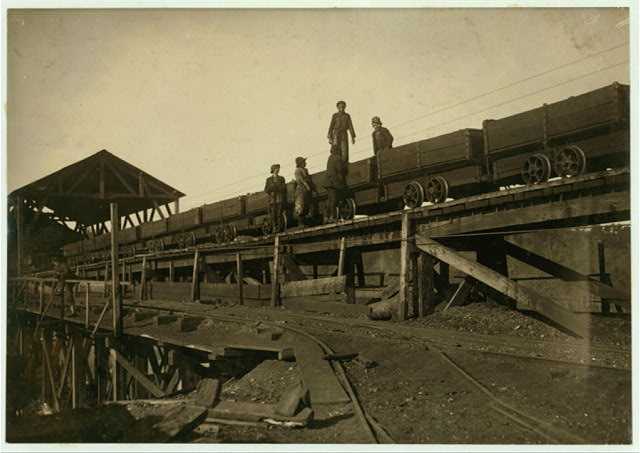
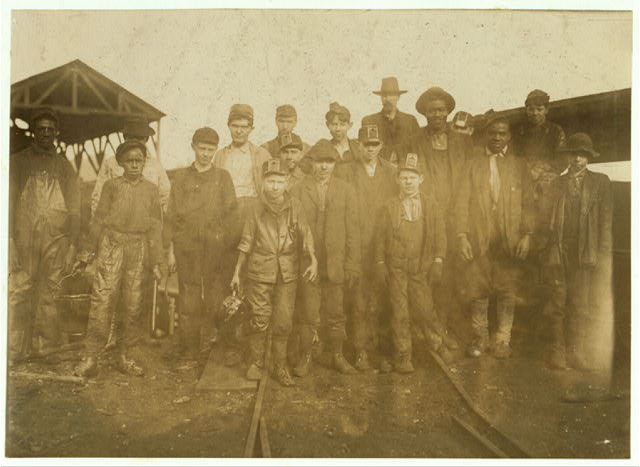
By 1914 there were more than six hundred men going underground at Brookside every morning, which is worth sitting with for a second, because four years before that the same mine had been down to fifty four. On the hillside above them Sloss ran two hundred domed brick ovens, built shoulder to shoulder so they would hold each other's heat and charged through a hole in the roof. A town grew to serve all of it. By 1900 Brookside had a railroad depot, dry goods stores, a drugstore, and more than one saloon, and its first school went up that same year. Cardiff took its charter in January 1900 with more than 560 people, several stores, two blacksmith shops, and a saloon of its own, and in 1911 it put on a street tax of two dollars and fifty cents a year that paid for road work all the way to 1946. By 1910 Slovak families made up roughly 37 percent of Brookside, and in 1916 that community finished the St. Nicholas building you can still go and see. Nearly everything these three towns still get measured against was built, counted, or finished inside these twenty years, which is also why the last entry lands the way it does. Cardiff's downtown burned on 20 July 1919, and the town's fortunes turned down with it.
What happened, and when
—- January 1900CardiffGovernment
Cardiff takes its charter
Cardiff incorporated in January 1900 with more than 560 people, several stores, two blacksmith shops, and a saloon.
- 1900BrooksideTown life
A depot, a drugstore, and several saloons
By 1900 Brookside had a railroad depot, dry goods stores, a drugstore, and more than one saloon. Its first school went up the same year and was replaced in 1923.
- The early 1900sBrooksideCoal
Two hundred beehive coke ovens
Sloss ran two hundred domed brick ovens at Brookside, in two banks of a hundred, built shoulder to shoulder so they would hold each other's heat and charged through a hole in the roof.
- 1903BrooksideCoal
The railroad the greenway runs on
The L&N built the Cane Creek Branch in 1903 to serve the mines at Brookside and Coalburg. It left the main line at Black Creek Junction in Fultondale, ran through Gardendale, and ended near Brookside. Its biggest crossing was the Newfound Creek trestle, 650 feet long, which a Jefferson County Historical Association newsletter records as the highest wooden railroad trestle in the United States in 1904. CSX gave the line up in 2003 and the track came out. That rail bed is the greenway.
- The early 1900sGraysvilleChurch
One church for everybody
The Union Church went up a street over from downtown Graysville. It was the only church for miles, so every denomination met in it.
- 1906BrooksidePeople
The miners organize, and win
Brookside’s miners were United Mine Workers, and in 1906 they struck and won. It was violent, and it was the last one here that went their way.
- July 17, 1908BrooksidePeople
The Battle of Jefferson
Thirty deputies went into the Jefferson Tunnel near Brookside on July 17, 1908, and more than a thousand strikers pushed them back out through it. Nobody calls it a battle for nothing, and almost nobody calls it anything at all now.
- August 26, 1908BrooksidePeople
What the strike was, and why it was broken
The 1908 strike put Black and white miners out together under District 20, one of the few interracial unions in the South, and that is the part the operators went after. They warned the union its biracial organizing would set off racial violence, and Governor B. B. Comer told its leaders that legislators would not tolerate what they saw as promoting equality between Black and white miners. On August 26 he sent the National Guard to cut down the tent colonies the evicted strikers were living in, calling them a public health nuisance. The union gave up four days later. A Black union member, William Millin, had already been taken out of the jail at Brighton and lynched by two mine deputies.
- 1911CardiffGovernment
Two dollars and fifty cents a year for the roads
Cardiff put on a street tax of $2.50 a year in 1911, and the road work it paid for ran on until 1946.
- 1912BrooksideTown life
Two movie theaters and a French bakery
The Brookside Social Club opened in 1912 and put on a dance every week. The town around it, at its fullest, had two movie theaters, three or four doctors, two drug stores, a French bakery and an icehouse.
- 1913BrooksideCoal
Machines take over from the pick
Mechanical cutters replaced hand picks at the Brookside mine in 1913.
- 1914BrooksideCoal
Six hundred men underground
The Brookside mine employed over 600 men in 1914, the most it ever had. Four years before that it had been down to 54.
- 1916BrooksideChurch
The church you can still go see
The St. Nicholas building was finished in 1916 and re-faced in brick in 1965. It still puts on a Russian and Slavic food festival the first full weekend in November.
- July 20, 1919CardiffFire and storm
Downtown burns
Cardiff's downtown burned on July 20, 1919, and the town's fortunes turned down with it.
Every entry above carries the source it came from, and these are those sources in full. All of it is public material found online, so anything here can be followed back and checked. It also means that where this chapter says something is not recorded, what that really says is that it has not turned up in any of these, which is a smaller claim. If you know better, and somebody reading this probably does, it would be good to hear from you.
- Bhamwiki, Brookside
- Bhamwiki, Brookside mine
- Bhamwiki, Cane Creek Branch
- Czechoslovak Genealogical Society International, Slovaks and Carpatho-Rusyns in Brookside, Alabama
- Encyclopedia of Alabama, Birmingham District Coal Strike of 1908
- Encyclopedia of Alabama, Brookside
- Encyclopedia of Alabama, Cardiff
- Library of Congress, Brookside Coal Mine, Beehive Coke Ovens, Mount Olive Road north of the Five Mile Creek bridge
- Wikipedia, Brookside, Alabama
- Wikipedia, Graysville, Alabama